
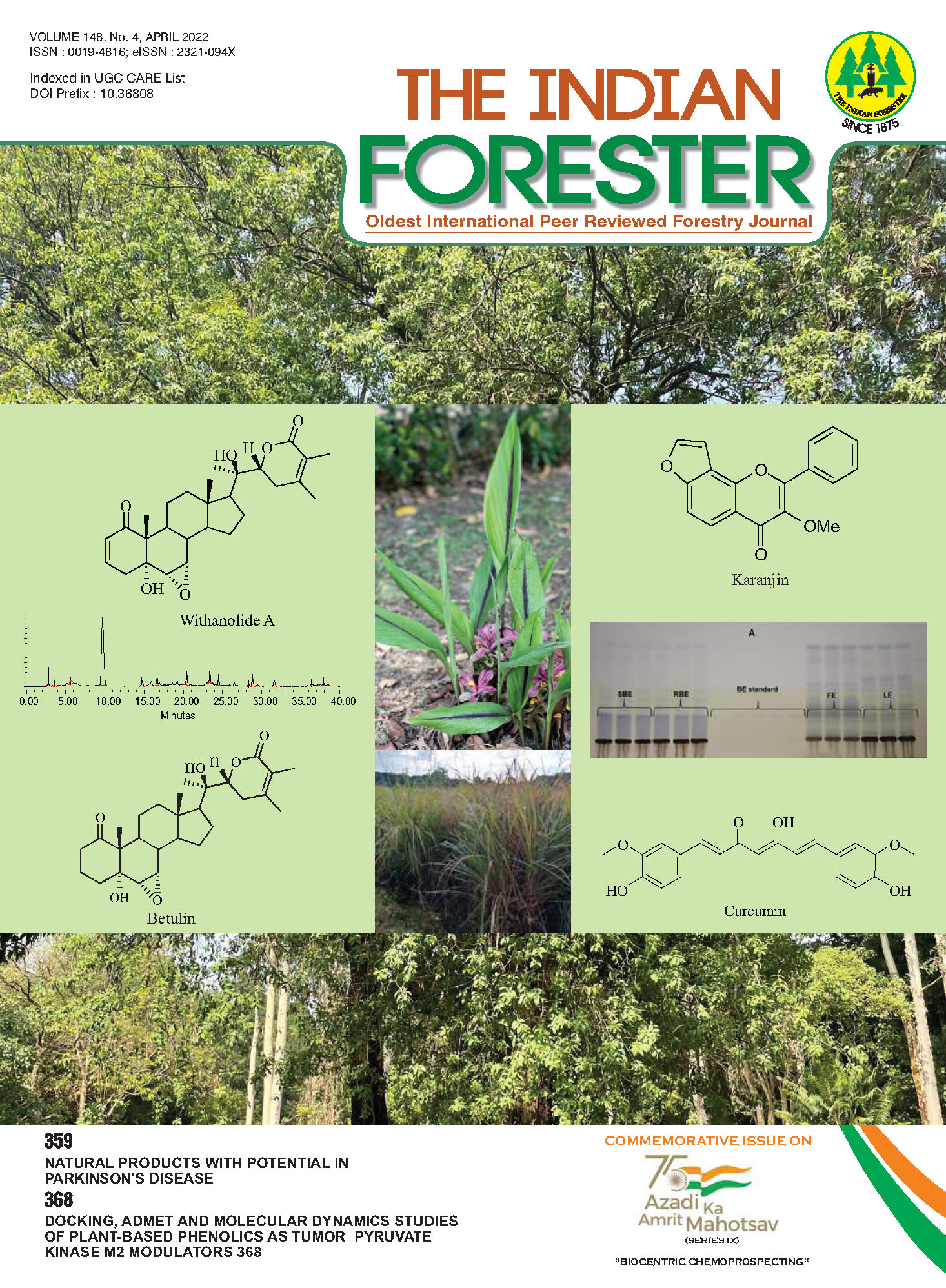
Natural Products with Potential in Parkinson's Disease
DOI:
https://doi.org/10.36808/if/2022/v148i4/168346Keywords:
Parkinson's Disease, Antioxidant, Lewy Body, Alphasynuclein, Herbal Drugs.Abstract
Parkinson's disease (PD) is a neurodegenerative disease affecting people of older age group. The complete etiology of Parkinson's disease is not known yet but there are some age related factors that contribute to this disease. Pathophysiology of PD includes various mechanisms like depletion of dopamine, oxidative stress by various reactive oxygen species (ROS), apoptosis of dopaminergic neurons, formation of Lewy bodies, aggregation of a-synuclein protein, genetic susceptibility and many others that still require further investigation. There are many herbs which have antioxidant potential and have been used since ancient times to treat various neurodegenerative disorders like Alzheimer, Epilepsy, Huntington's as well as Parkinson's disease. Many experimental studies have been conducted to determine the neuroprotective effect of herbal extracts against PD and to elucidate their mechanism of protection, however, further studies are still required to determine the active principles in many of these herbs producing this neuroprotective effect. In this review, Authors have identified and compiled herbal drugs active principles targeting PD.References
Ablat N., Lv D., Ren R., Xiaokaiti Y., Ma X., Zhao X., Sun Y., Lei H., Xu J., Ma Y. and Qi X. (2016). Neuroprotective effects of a standardized flavonoid extract from safflower against a rotenone-induced rat model of Parkinson's disease, Molecules, 21: 1107.
Abushouk A.I., Negida A., Ahmed H. and Abdel-Daim M.M. (2017). Neuroprotective mechanisms of plant extracts against MPTP induced neurotoxicity: Future applications in Parkinson's disease, Biomedicine and Pharmacotherapy, 85: 635-645.
Ahmad M., Saleem S., Ahmad A.S., Ansari M.A., Yousuf S., Hoda M.N. and Islam F. (2005). Neuroprotective effects of Withania somnifera on 6-hydroxydopamine induced Parkinsonism in rats. Human & Experimental Toxicology, 24: 137-147.
Ahmad S., Khan M.B., Hoda M.N., Bhatia K., Haque R., Fazili I.S., Jamal A., Khan J.S. and Katare D.P. (2012). Neuroprotective effect of sesame seed oil in 6-hydroxydopamine induced neurotoxicity in mice model: cellular, biochemical and neurochemical evidence. Neurochemical Research, 37: 516-526.
Akhoon B.A., Pandey S., Tiwari S. and Pandey R. (2016). With anolide A offers neuroprotection, ameliorates stress resistance and prolongs the life expectancy of Caenorhabditis elegans. Experimental Gerontology, 78: 47-56.
Balkrishna A. and Misra L. (2018). Chemo-botanical and neurological accounts of some ayurvedic plants useful in mental health, The Natural Products Journal, 8: 14-31.
Chandrasekar S., Thangarajan S., Loganathan S. and Sundaram S. (2013). Molecular docking studies of Bacoside-A, an active component of Bacopa monniera with DJ1 for AntiParkinson's drug design, Biomirror, 4: 1-4.
Cheng F.C., Jinn T.R., Hou R.C. and Tzen J.T. (2006). Neuroprotective effects of sesamin and sesamolin on the gerbil brain in cerebral ischemia. International Journal of Biomedical Science: IJBS, 2: 284-288.
Choi H.S., Park M.S., Kim S.H., Hwang B.Y., Lee C.K. and Lee M.K. (2010). Neuroprotective effects of herbal ethanol extracts from Gynostemma pentaphyllum in the 6-hydroxydopaminelesioned rat model of Parkinson's disease. Molecules, 15:2814-2824.
Dexter D.T. and Jenner P. (2013). Parkinson disease: from pathology to molecular disease mechanisms, Free Radical Biology and Medicine, 62: 132-144.
Hatcher J.M., Pennell K.D. and Miller G.W. (2008). Parkinson's disease and pesticides: a toxicological perspective, Trends in Pharmacological Sciences, 29: 322-329.
Ishrat T., Hoda M.N., Khan M.B., Yousuf S., Ahmad M., Khan M.M., Ahmad A. and Islam F. (2009). Amelioration of cognitive deficits and neurodegeneration by curcumin in rat model of sporadic dementia of Alzheimer's type (SDAT). European Neuropsychopharmacology, 19: 636-647.
Ji X., Lu Y., Tian H., Meng X., Wei M. and Cho W.C. (2019). Chemoresistance mechanisms of breast cancer and their countermeasures. Biomedicine and Pharmacotherapy, 114: 108800.
Joshi R., Kumar M.S., Satyamoorthy K., Unnikrisnan M.K. and Mukherjee T. (2005). Free radical reactions and antioxidant activities of sesamol: pulse radiolytic and biochemical studies. Journal of Agricultural and Food Chemistry, 53: 2696-2703.
Khuwaja G., Khan M.M., Ishrat T., Ahmad A., Raza S.S., Ashafaq M., Javed H., Khan M.B., Khan A., Vaibhav K. and Safhi M.M. (2011). Neuroprotective effects of curcumin on 6hydroxydopamine-induced Parkinsonism in rats: behavioral, neurochemical and immunohistochemical studies. Brain Research, 1368: 254-263.
Kim I.S., Choi D.K. and Jung H.J. (2011). Neuroprotective effects of vanillyl alcohol in Gastrodia elata Blume through suppression of oxidative stress and anti-apoptotic activity in toxin-induced dopaminergic MN9D cells. Molecules, 16: 5349-5361.
Koppula S., Kumar H., More S.V., Lim H.W., Hong S.M. and Choi D.K. (2012). Recent updates in redox regulation and free radical scavenging effects by herbal products in experimental models of Parkinson's disease, Molecules, 17: 11391-11420.
Langston J.W. (2017). The MPTP story, Journal of Parkinson's Disease, 7 (s1):S11-S19.
Lee H.W., Ryu H.W., Kang M.G., Park D., Lee H., Shin H.M., Oh S.R. and Kim H. (2017). Potent inhibition of monoamine oxidase A by decursin from Angelica gigas Nakai and by wogonin from Scutellaria baicalensis Georgi. International Journal of Biological Macromolecules, 97: 598-605.
Li F.Q., Wang T., Pei Z., Liu B. and Hong J.S. (2005). Inhibition of microglial activation by the herbal flavonoid baicalein attenuates inflammation-mediated degeneration of dopaminergic neurons. Journal of Neural Transmission, 112: 331-347.
Li X.Z., Zhang S.N., Liu S.M. and Lu F. (2013). Recent advances in herbal medicines treating Parkinson's disease, Fitoterapia, 84: 273-285.
Meredith G.E., Sonsalla P.K. and Chesselet M.F. (2008). Animal m o d e l s o f P a r k i n s o n ' s d i s e a s e p r o g r e s s i o n. Actaneuropathologica, 115: 385-398.
Moretto A. and Colosio C. (2011). Biochemical and toxicological evidence of neurological effects of pesticides: the example of Parkinson disease, Neurotoxicology, 32: 383-399.
Morroni F., Tarozzi A., Sita G., Bolondi C., Moraga J.M.Z., Cantelli-Forti G. and Hrelia P. (2013). Neuroprotective effect of sulforaphane in 6-hydroxydopamine-lesioned mouse model of Parkinson's disease. Neurotoxicology, 36: 63-71.
Qu W., Fan L., Kim Y.C., Ishikawa S., Iguchi-Ariga S.M., Pu X.P. and Ariga H. (2009). Kaempferol derivatives prevent oxidative stress–induced cell death in a DJ-1–dependent manner, Journal of Pharmacological Sciences, 110: 191-200.
Rabiei Z., Solati K. and Amini-Khoei H. (2019). Phytotherapy in treatment of Parkinson's disease: a review, Pharmaceutical Biology, 57: 355-362.
Sedaghat R., Roghani M. and Khalili M. (2014). Neuroprotective effect of thymoquinone, the nigella sativa bioactive compound, in 6-hydroxydopamine-induced hemi-parkinsonian rat model. Iranian Journal of Pharmaceutical Research, 13: 227-234.
Shad K.F., Al-Salam S. and Hamza A.A. (2007). Sesame oil as a protective agent against doxorubicin induced cardiotoxicity in rats. American Journal of Pharmacology and Toxicology, 2: 159–163.
Shukla V.C., Phulara S., Yadav D., Tiwari S., Kaur S., M Gupta M., Nazir A. and Pandey R. (2012). Iridoid compound 10-Otransp-coumaroylcatalpol extends longevity and reduces alpha synuclein aggregation in Caenorhabditis elegans. CNS & Neurological Disorders-Drug Targets (Formerly Current Drug Targets-CNS & Neurological Disorders), 11: 984-992.
Siderowf A. and Stern M. (2003). Update on Parkinson disease, Annals of Internal Medicine, 138 (8): 651-658.
Simon D.K., Tanner C.M. and Brundin P. (2020). Parkinson disease epidemiology, pathology, genetics, and pathophysiology, Clinics in Geriatric Medicine, 36: 1-12.
Singh M., Murthy V. and Ramassamy C. (2012). Standardized extracts of Bacopa monniera protect against MPP+-and paraquat-induced toxicity by modulating mitochondrial activities, proteasomal functions, and redox pathways, Toxicological Sciences, 125: 219-232.
Srivastava S., Sammi S.R., Laxman T.S., Pant A., Nagar A., Trivedi S., Bhatta R.S., Tandon S. and Pandey R. (2017). Silymarin promotes longevity and alleviates Parkinson's associated pathologies in Caenorhabditis elegans. Journal of Functional Foods, 31: 32-43.
Srivastava S., Srivastava S., Singh M.R., Singh D. and Tekwani B.L. (2020). Novel perspectives for delivery of bioactives through blood–brain barrier and treatment of brain diseases. In: Advances and Avenues in the Development of Novel Carriers for Bioactives and Biological Agents, Academic Press, pp. 317-341.
Tanner C.M., Kamel F., Ross G.W., Hoppin J.A., Goldman S.M., Korell M., Marras C., Bhudhikanok G.S., Kasten M., Chade A.R. and Comyns K. (2011). Rotenone, paraquat, and Parkinson's disease, Environmental Health Perspectives, 119: 866-872.
Tripathi K.D. (2019). Essentials of medical pharmacology. JP Medical Ltd, New Delhi p452.
Ullah H. and Khan H. (2018). Anti-Parkinson potential of silymarin: mechanistic insight and therapeutic standing. Frontiers in Pharmacology, 9: 422.
Wang M.J., Lin W.W., Chen H.L., Chang Y.H., Ou H.C., Kuo J.S., Hong J.S. and Jeng K.C.G. (2002). Silymarin protects dopaminergic neurons against lipopolysaccharide-induced neurotoxicity by inhibiting microglia activation. European Journal of Neuroscience, 16: 2103-2112.
Wang P., Niu L., Gao L., Li W.X., Jia D., Wang X.L. and Gao G.D. (2010). Neuroprotective effect of gypenosides against oxidative injury in the substantia nigra of a mouse model of Parkinson's disease. Journal of International Medical Research, 38: 1084-1092.
Xu H., Jiang H., Wang J. and Xie J. (2010). Rg1 protects the MPP+treated MES23. 5 cells via attenuating DMT1 up-regulation and cellular ironuptake. Neuropharmacology, 58: 488-494.
Xu J., Li Y., Guo Y., Guo P., Yamakuni T. and Ohizumi Y. (2012). Isolation, structural elucidation, and neuroprotective effects of iridoids fromValerianajatamansi. BioscienceBiotechnology and Biochemistry, 76: 1401-1403.
Yu L., Chen C., Wang L.F., Kuang X., Liu K., Zhang H. and Du J.R. (2013). Neuroprotective effect of kaempferol glycosides against brain injury and neuroinflammation by inhibiting the activation of NF-κB and STAT3 in transient focal stroke. PloS One, 8: 55839.
Zecca L., Youdim M.B., Riederer P., Connor J.R. and Crichton R.R. (2004). Iron, brain ageing and neurodegenerative disorders. Nature Reviews Neuroscience, 5: 863-873.
Zhao G., Zheng X.W., Qin G.W., Gai Y., Jiang Z.H. and Guo L.H. (2009). In vitro dopaminergic neuroprotective and in vivo antiparkinsonian-like effects of Δ3, 2-hydroxy bakuchiol isolated from Psoralea corylifolia (L.). Cellular and Molecular Life Sciences, 66: 1617-1629.
Downloads
Downloads
Published
How to Cite
Issue
Section
License
Unless otherwise stated, copyright or similar rights in all materials presented on the site, including graphical images, are owned by Indian Forester.


